
Complete BDC Automotive Performance Scorecard: What Metrics Define Success for BDC Dealers Using AI in BDC Reporting Tools
Introduction: Why Most BDC Dealers Are Measuring the Wrong Things
Data is only as powerful as the questions you ask of it. Many BDC dealers today are swimming in numbers, call counts, email open rates, and appointment logs, yet struggling to translate those numbers into genuine performance clarity. The arrival of AI in BDC reporting tools has radically expanded what is measurable, but with greater data availability comes a greater risk of metric confusion. Are you tracking what feels measurable, or what actually predicts revenue? This article is a deep dive into the metrics that genuinely define success for BDC dealers who have integrated AI-powered reporting into their BDC automotive operations. Whether your dealership runs an in-house BDC or partners with an outsourced BDC provider, these are the numbers that will tell you whether your business development operation is actually developing business.
The Foundation: What AI in BDC Reporting Tools Can Actually Measure
Moving Beyond Vanity Metrics
Traditional BDC reporting focused heavily on volume metrics: calls made, emails sent, texts dispatched. These are activity metrics that indicate effort but reveal nothing about effectiveness. AI in BDC reporting tools shift the lens to outcome metrics, measures that connect BDC activity directly to revenue impact. Modern platforms can track call sentiment in real time using natural language processing, score individual agent conversations for compliance and quality, correlate specific outreach sequences to actual sold units, and surface anomalies in lead handling before they become systemic problems. The difference between a BDC car dealership using legacy reporting and one using AI-powered analytics is roughly analogous to the difference between checking a thermometer and running a full metabolic panel, one tells you the temperature, the other tells you what is actually happening inside the body.
The AI Advantage in Real-Time Reporting
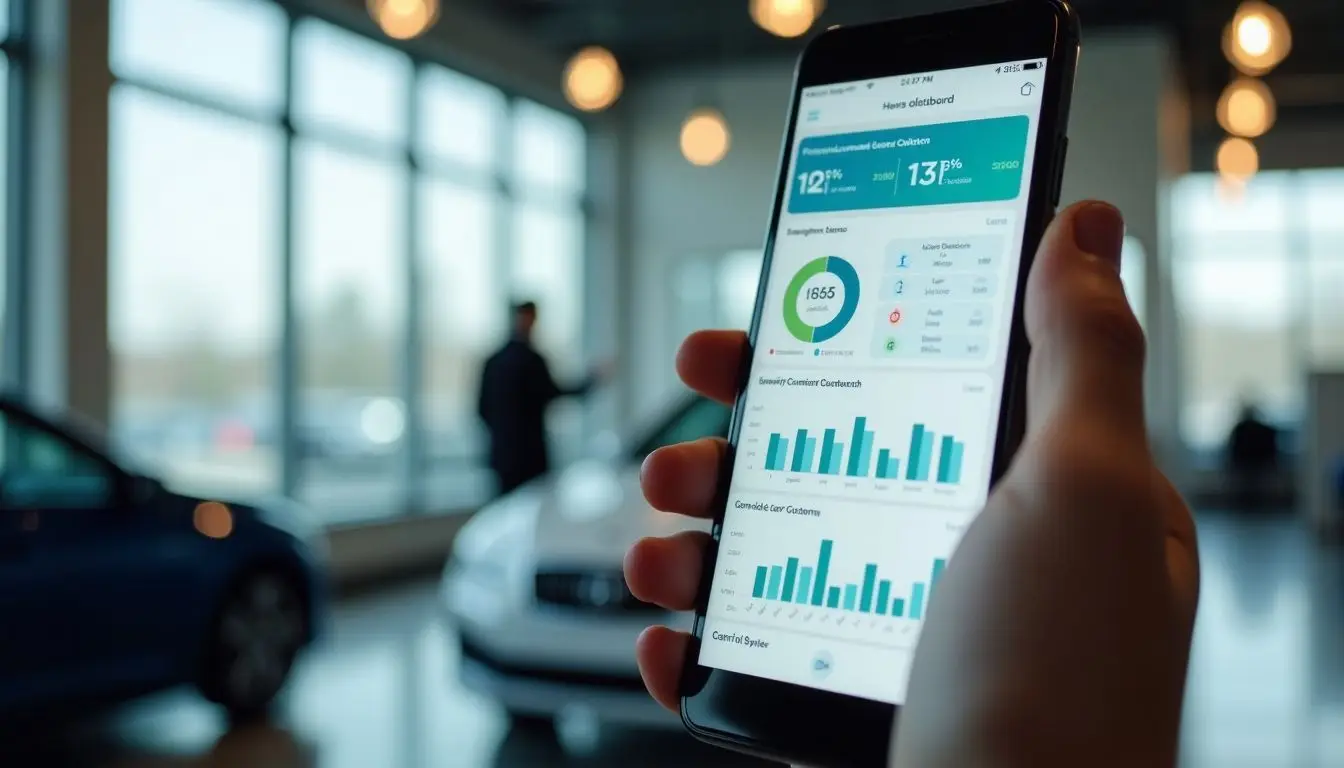
BDC dealers who have adopted AI reporting tools consistently cite real-time visibility as the most transformative capability. Traditional monthly reporting cycles mean problems identified in week one are not addressed until week five, by which time a systemic issue has cost the dealership dozens of lost leads and thousands in missed gross. AI in BDC platforms generates live dashboards that flag underperformance the moment it emerges, a specific agent’s appointment-setting rate dipping below threshold, a lead source whose show rate has collapsed, or a vehicle category where VDP interest is spiking but BDC follow-up is lagging. Dealerships that actively track and optimize BDC performance metrics through AI reporting tools see up to 30% more appointments booked and 25% higher close rates, according to industry analysis.
Core Success Metrics for AI-Powered BDC Reporting
Lead Response Time: The 5-Minute Rule
Lead response time remains the single most consequential metric in BDC automotive performance, and AI in BDC reporting tools makes it impossible to hide a slow response. Research consistently shows that leads contacted within five minutes of submission are dramatically more likely to convert than those who wait; some studies quantify this advantage at up to 100 times the conversion rate of leads contacted after 30 minutes. AI reporting tools timestamp every lead entry and every outbound contact attempt, calculating true response time rather than the optimistic numbers that sometimes appear in manually updated CRM fields. BDC dealers with AI reporting accountability maintain average response times under two minutes; those without it often discover their actual average is closer to two hours.
Appointment Set Rate and Appointment Show Rate
These two metrics must always be read together, because a high set rate paired with a poor show rate exposes a fundamental quality problem in your BDC automotive operation. Appointment set rate, the percentage of contacted leads who agree to a showroom appointment, reflects the quality of your communication scripts and the persuasiveness of your team. The show rate, the percentage of those appointments that actually walk through the door, reflects the authenticity of those commitments and the effectiveness of your confirmation sequences. AI in BDC tools tracks both in tandem and alerts managers when the gap between the two exceeds normal variance. Industry top performers maintain show rates above 70%; AI reporting helps identify exactly which agents, scripts, or lead sources are dragging that number below benchmark.
Cost Per Appointment and Cost Per Sale
Understanding the true cost of each appointment generated by your BDC automotive operation requires connecting your CRM data, your marketing spend, and your BDC overhead, something that AI reporting platforms are specifically designed to do. Cost per appointment reveals whether your lead acquisition and BDC handling expenses are sustainable at your current conversion rates. Cost per sale, tracing the full journey from initial lead contact through BDC appointment to closed deal, provides the most holistic view of BDC ROI. BDC dealers who outsource BDC operations often see this metric improve sharply because outsourced providers eliminate the fixed overhead of in-house staffing, reducing cost per appointment by 40–60% compared to fully internal models.
| KPI | Definition | Top Performer Benchmark |
|---|---|---|
| Lead Response Time | First contact after lead submission | Under 2 minutes |
| Appointment Set Rate | % of leads that book appointments | 28–35% |
| Appointment Show Rate | % of booked appointments that arrive | 70%+ |
| Cost Per Appointment | Total BDC cost ÷ appointments set | Under $85 |
| Cost Per Sale (BDC) | BDC cost attributed to each closed deal | Under $250 |
| Lead-to-Close Conversion | % of leads resulting in a sale | 5–8% |
Advanced Metrics That AI in BDC Makes Possible
Sentiment Score and Conversation Quality Index
AI in BDC reporting tools equipped with natural language processing can analyze every recorded phone call and every text exchange to generate a sentiment score, a quantitative measure of how positive, neutral, or adversarial each buyer interaction was. This capability transforms quality control from a sampling exercise (listening to 5% of calls monthly) into a comprehensive audit of 100% of conversations. A dropping average sentiment score across an agent’s book signals burnout, script rigidity, or skills gaps that need intervention before they damage the dealership’s reputation. A BDC car dealership monitoring sentiment at scale can identify and replicate the conversational patterns used by top-performing agents and train underperformers on those specific behaviors.
Pipeline Velocity and Lead Age Distribution
Pipeline velocity measures how quickly leads move from initial contact through appointment to sale. AI reporting tools map this journey for every lead in your system and surface bottlenecks, stages where leads stall and eventually go cold. Lead age distribution, a related metric, shows what percentage of your active lead pipeline is under 7 days old, 8–30 days, and over 30 days. A pipeline with too much aged inventory (leads over 30 days old) signals that early-stage engagement is failing to move prospects forward, often indicating that follow-up sequences are too passive or that the initial value proposition is not compelling enough. BDC automotive operations with healthy pipeline velocity maintain over 60% of active leads under 14 days of age.
Source Attribution Accuracy
One of the most powerful capabilities of AI in BDC reporting is multi-touch attribution, the ability to credit the correct combination of marketing touchpoints and BDC interactions for each sale. Traditional last-touch attribution models inflate the apparent value of the final contact before sale while ignoring the earlier nurture touchpoints that built the relationship. AI attribution models analyze the full buyer journey and distribute credit proportionally, giving BDC dealers a far more accurate picture of which lead sources, which follow-up sequences, and which agent interactions are actually driving revenue. This enables smarter marketing spend allocation and more informed outsourced BDC contract evaluations.
Operational Metrics for Outsource BDC Performance Management
Holding BDC Partners Accountable
When a BDC car dealership partners with an outsource BDC provider, AI-powered reporting becomes the contractual backbone of the relationship. Without transparent, real-time data access, the dealership has no reliable way to verify that the outsource BDC team is meeting agreed-upon performance standards. The best outsource BDC relationships are built on shared dashboards, both parties see the same data simultaneously, which eliminates disputes about whether targets are being met and creates accountability that drives performance. Metrics like first-call resolution rate, abandonment rate on inbound calls, and average handle time on service appointments are examples of operational benchmarks that should be explicitly defined in any outsource BDC service agreement.
Tips for BDC Dealers: Making AI Reporting Work for Your Store
Tip 1: Build a Weekly Metrics Review Ritual
Schedule a 30-minute weekly review of your core AI reporting dashboard with your BDC manager. Focus on trend direction rather than absolute numbers; a show rate moving from 65% to 63% over three weeks is a warning signal, even if 63% is still above the industry average.
Tip 2: Create Agent-Level Scorecards
Use AI reporting data to build individual scorecards for each BDC team member. Make these visible to the agents themselves; transparency drives accountability and healthy competition. Pair scorecard visibility with coaching conversations focused on specific behaviors rather than raw outcomes.
Tip 3: Define Your North Star Metric
With so much data available, it is easy to optimize for multiple metrics simultaneously and make progress on none of them. Choose one north star metric, for most BDC dealers, this is cost per sale or show rate, and align all team incentives and coaching conversations around moving that single number in the right direction.
Conclusion
Success for BDC dealers in the AI reporting era is defined not by how much data you collect but by how precisely you act on the right data at the right time. AI in BDC reporting tools give the modern BDC automotive operation capabilities that were unimaginable five years ago, real-time sentiment analysis, multi-touch attribution, pipeline velocity mapping, and predictive lead scoring. The dealerships that translate these capabilities into disciplined weekly rituals, clear accountabilities, and focused improvement initiatives will pull dramatically ahead of competitors still relying on end-of-month spreadsheet summaries. Whether your BDC is in-house or outsourced, the scorecard framework in this article gives you the language and the metrics to measure what genuinely matters.
FAQs
1. What is the most important single metric for a BDC car dealership to track?
Appointment show rate is arguably the most actionable single metric because it sits at the intersection of communication quality, customer trust, and inventory movement velocity. Improving the show rate produces an immediate downstream revenue impact.
2. How often should BDC dealers review AI reporting dashboards?
Core operational metrics should be reviewed daily by BDC managers and weekly in a structured team review. Strategic metrics like cost per sale and source attribution should be analyzed monthly and used to inform quarterly outsource BDC contract reviews and marketing budget allocations.
3. Can AI reporting tools integrate with existing CRM platforms?
Yes. Most leading AI in BDC reporting platforms offer native integrations with major automotive CRM systems, including VinSolutions, DealerSocket, Elead, and Tekion, enabling seamless data synchronization without manual exports.
4. How does AI sentiment analysis improve BDC performance?
By analyzing 100% of recorded interactions rather than a small sample, sentiment analysis identifies coaching opportunities at scale, catches compliance issues before they become legal risks, and surfaces the specific language patterns used by top-performing agents so they can be taught across the entire team.
5. Should outsource BDC providers share real-time reporting access?
Absolutely. Any outsource BDC partner who cannot provide shared real-time dashboard access should be viewed with caution. Transparency in performance data is the foundation of a productive outsource BDC relationship and the only reliable basis for performance-based contract management.