
Farm, Ranch and Acreage Owners: Turn Field Rock and Old Slabs into Free Road Base
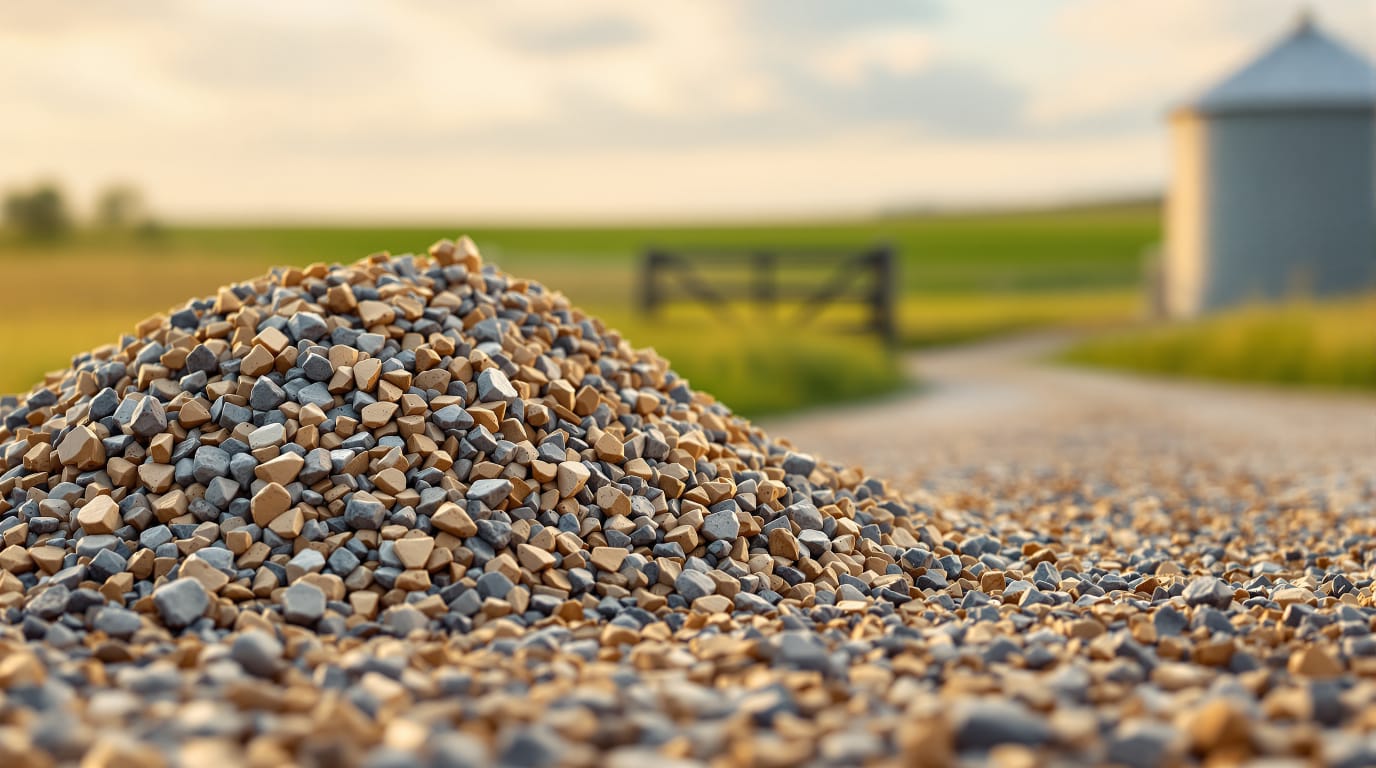
Every farm and ranch has a pile of rock or an old slab nobody knows what to do with, and a long dirt road that keeps washing out. A portable jaw crusher can turn the first problem into the solution to the second, if you know what’s realistic for your property.
If you’ve ever wondered how to turn field rock into road base, the short answer is that you crush it, screen it and compact it where you need it. Here’s how it works, what it costs you in effort and where the pitfalls are.
Why Landowners Turn to Crushing
Rural properties tend to collect hard-to-move material. Plowed-up field rock, old barn foundations, broken slabs and driveway concrete pile up at the edges of fields. Meanwhile, buying and trucking in gravel for lanes, pads and farm roads is expensive, especially when the nearest pit is far away. Crushing what you already have cuts both problems down.
What You Can Make
Farm road base from recycled concrete is one of the most common uses. Crushed concrete compacts into a firm, well-draining surface that holds up to trucks, tractors and trailers better than bare dirt.
If you want to know how to make gravel from rocks on your property, the process is similar. Field rock goes through a crusher that breaks it into smaller, more uniform pieces, which you can use for:
- Farm lanes and ranch roads: A firm base keeps ruts and mud under control.
- Equipment pads and barn aprons: Compacted crushed material gives you a stable work surface.
- Driveway base: If you plan to crush old concrete for driveway base, you can use it as the foundation layer under a finer top surface.
- Drainage and erosion control: Coarser material works in low spots, culvert approaches and washouts.
How the Process Works
- Gather and sort. Pile your rock and concrete in one accessible spot. Remove rebar, wire, wood and dirt where you can.
- Size it for the machine. Big boulders and slabs need to be broken down before they can go in the feed opening. Check what your crusher accepts.
- Crush. Feed material at a steady rate and adjust the setting to get the size you want.
- Screen if needed. Separating fines from coarse pieces gives you a more consistent product, and some uses call for it.
- Place and compact. Spread the material, then compact it in layers so it settles into a stable surface.
Is a Rock Crusher for Farm and Ranch Use Realistic?
This is where being honest matters. A rock crusher for farm and ranch use is a significant machine. Equipment sized for contractors can process far more material than most single properties generate, so buying one only makes sense for large acreage, several landowners sharing a machine, or an operator who also crushes for others.
For many owners, better options are:
- Hire a custom crusher. Contractors bring the machine to you, crush your pile and leave. You pay for the work, not the equipment.
- Rent a machine. If you have the labor and a loader or excavator, renting for a few days may be enough.
- Share with neighbors. Pooling material and costs spreads the expense across several properties.
- Phase the work. Crush a little each season to build up a stockpile.
Run the numbers before you commit. Compare the cost of crushing against the price of imported gravel, hauling and your own time.
Watch Out for These Pitfalls
- Contaminated material. Dirt, roots, trash, rebar and chemicals can ruin a batch and cause problems later. Don’t crush anything you aren’t sure about.
- Rules and permits. Crushing, dust and the use of recycled concrete may be regulated at the state or county level. Check before you start, and keep what you learn in writing.
- Safety. Crushers have moving parts, flying debris and loud noise. Operators should be trained, and bystanders should stay well away.
- Dust and neighbors. Plan for wind direction and keep dust down with water if you can.
- Rough expectations. Field rock varies a lot in hardness, and harder rock takes more time and puts more wear on the machine.
Put Your Rock to Work
If you’re weighing up crushing options for your land, talk to the team at R.R. Equipment about what size of machine and what approach fits your material and acreage.